Bare Concrete
Best SurfaceThis system is designed to bond to properly prepared concrete. The concrete must be clean, dry, sound, and mechanically ground or shot blasted.
“We do a lot of food prep areas and this stuff holds up. No grease stains, no peeling. Reliable every time.”
Fast 3–5 Business Day Delivery Direct To Site
Mixed Fresh in the USA - Guaranteed to Perform
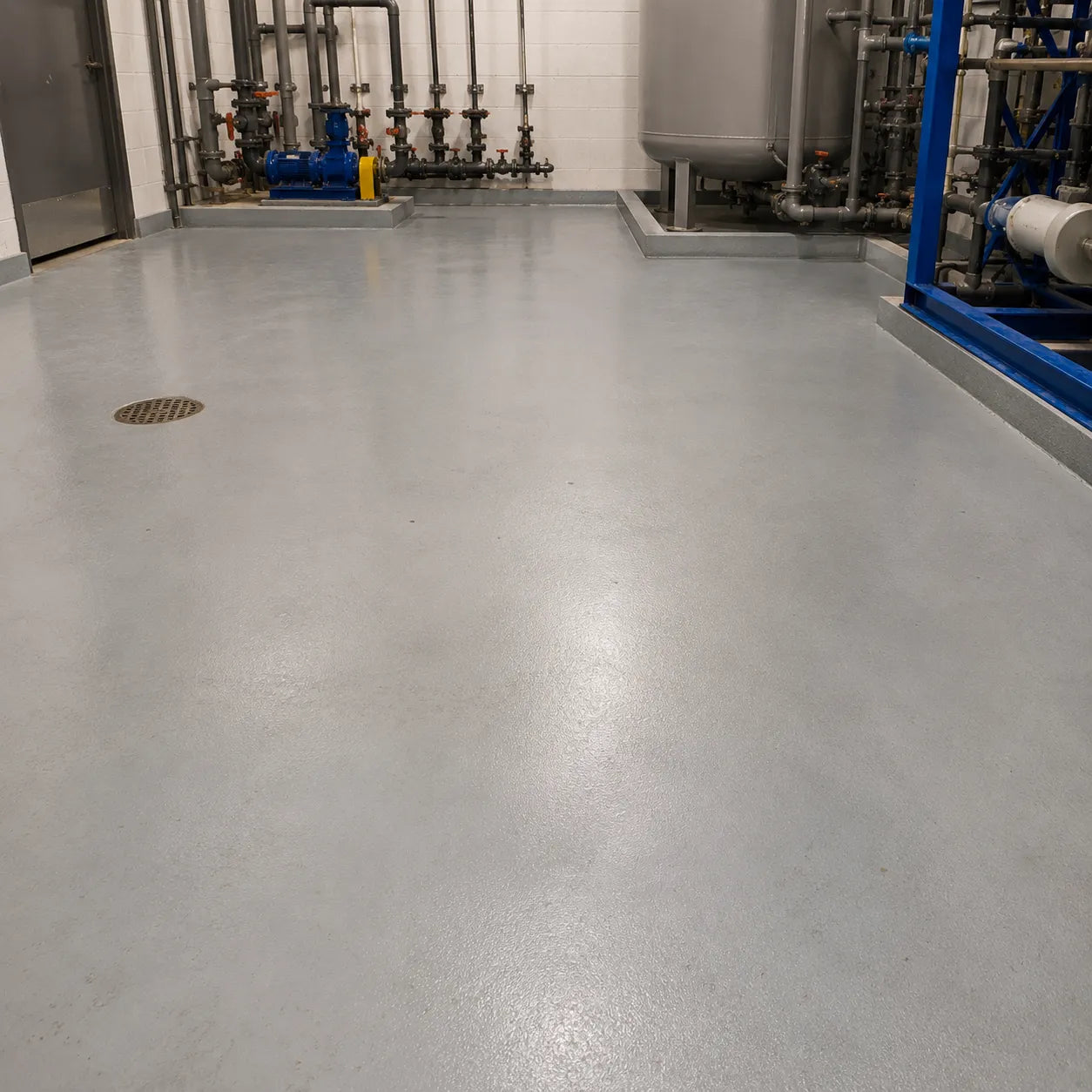
Dymond BondMaxx 140 is a high-solids, two-component colored novolac epoxy primer designed for use beneath compatible chemical-resistant novolac coating systems. Its low-viscosity formulation provides excellent penetration into properly prepared concrete and cementitious substrates while helping seal the surface before higher-build novolac topcoats are applied.
By reducing air release and outgassing from porous concrete, BondMaxx 140 helps minimize pinholes, bubbles and other surface imperfections in high-build and self-leveling chemical-resistant flooring systems. Its low-odor formulation and extended working time make it a practical primer for demanding industrial and commercial environments.
BondMaxx 140 provides resistance to a broad range of industrial chemicals when fully cured. Published testing includes long-term immersion resistance to 10% and 50% sodium hydroxide, 10% sulfuric acid, 10% hydrochloric acid and ethylene glycol. Resistance varies according to the chemical, concentration, temperature, exposure period and complete flooring system.
BondMaxx 140 does not require a separate primer and is itself intended to serve as the primer layer within a compatible novolac flooring system. Dymond SolidCor 230 Novolac Epoxy Topcoat is the recommended finish coat. Other compatible novolac coatings may also be suitable, but system compatibility should be confirmed before installation.
Concrete must be clean, dry, mechanically prepared and free from laitance, oil, dust and other contaminants. Thin-build systems require a suitable mechanical profile, while systems exceeding 10 mils dry thickness are best prepared by fine shot blasting.
Combine Part A and Part B at the specified ratio and mix thoroughly using slow-speed mixing equipment until the material is uniform and streak-free. Apply by brush or roller at 5 to 6 mils wet thickness. For best results, use a high-quality 3/8-inch nap roller.
BondMaxx 140 must be topcoated with a suitable novolac epoxy coating. Before topcoating, confirm that the primer is fully tack-free and does not retain a fingerprint when pressed firmly with a thumb. Inspect for epoxy blush and remove any whitish or greasy film with a suitable detergent cleaner before applying the next coat.
Important: New concrete must cure for at least 30 days. Slabs on grade require a functioning moisture barrier, and the substrate temperature must remain at least 5°F above the dew point. Refer to the Technical Data Sheet and Safety Data Sheet before use.
The Strength of Diamond. The Confidence of a Lifetime.
Dymond Coatings are engineered with the same qualities as their namesake — tough, long-lasting, and built to bond for life. That’s why we back every eligible Dymond kit with our Lifetime Promise: if your floor fails due to a verified product defect, we’ll replace the material or issue a credit toward your next job. This warranty applies to complete Dymond systems (primer, base coat, and topcoat) when installed on indoor concrete surfaces and applied according to Dymond’s preparation and application guidelines. Covered issues include delamination caused by faulty resin blends, curing failure due to batch defects, and contamination introduced during manufacturing or packaging. To qualify, the product must be within shelf life, used under proper storage conditions, and installed using only Dymond components.
This warranty does not extend to issues arising from improper surface preparation, substrate contamination, excessive moisture vapor, impact or abuse, substrate movement, or UV discoloration of white/light epoxies. Installations over wood, tile, or outdoor surfaces are excluded unless specifically approved. Cosmetic issues such as texture variation, microbubbling, or minor tint shift are not covered. Warranty coverage is limited to the original purchaser and is non-transferable. Claims must be submitted with photographic evidence of each install stage and full batch documentation. Dymond reserves the right to determine whether the cause of failure falls within warranty scope.
This Promise applies to most DIY and light commercial indoor projects. Larger commercial and industrial installations may be eligible for custom coverage — contact us for terms.
Yes, in many cases, but the floor underneath has to be clean, solid, and mechanically prepared. The coating can only bond as well as the surface it is applied to.
Every floor is different. When coating over anything other than properly prepared concrete, we strongly recommend applying a small test area first.
This system is designed to bond to properly prepared concrete. The concrete must be clean, dry, sound, and mechanically ground or shot blasted.


This system can be installed over an existing epoxy coating if the old coating is firmly bonded, clean, sound, and fully deglossed.


Can be installed when tile is firmly bonded, clean, degreased, abraded, and tested first. Installation is done at your own risk.


Many customers successfully coat over VCT, but the bond depends on tile, adhesive, waxes, moisture, and movement. Installation is at your own risk.


Requires a scratch coat first. Wood installations are done at your own risk. Always test first.
For a strong bond, the surface must be mechanically prepared. Cleaning alone is not enough.
The floor must be mechanically ground or shot blasted to create a surface profile the coating can grip.
Oil, grease, wax, soap residue, dust, old adhesive, sealers, and loose material must be removed before coating.
Cracks, holes, divots, and damaged areas should be filled before coating for a stronger, smoother finish.
For tile, VCT, wood, unknown coatings, sealed floors, or questionable surfaces, apply a small test area.
Yes. For a strong bond, the coating needs a clean, mechanically prepared surface profile.
Delamination is when the coating separates, peels, bubbles, or lifts from the floor underneath.
Often yes, if the existing coating is fully bonded, clean, sound, abraded, and tested first.
Sometimes, but the installation depends on the tile, adhesive, waxes, movement, and moisture. Test first.
Wood is conditional and normally needs a scratch coat. Always test first.
Tile can be conditional. It must be firmly bonded, cleaned, abraded, and tested before a full installation.
Every floor is different. If you are coating over tile, VCT, wood, an unknown coating, sealed concrete, or a questionable surface, apply a small test area first before installing the full system.
The coating can only perform as well as the surface underneath it.
Ask it here. Our product experts are ready and happy to help with any questions you have.
Pro Tip: Always read the full Installation Guide and Product Data Sheets before starting your project. Proper prep is the key to a long-lasting, beautiful floor.