Shot Blasting vs Grinding vs Acid Etching: What Actually Works for Epoxy Floors

Choosing the wrong surface preparation method is one of the fastest ways to undermine an epoxy floor installation. Epoxy systems are engineered for strength and durability, but they rely on the concrete beneath them for adhesion. If the surface is not prepared correctly, even a well-designed coating system can fail.
This article breaks down the three most commonly discussed preparation methods, explains where each one makes sense, and clarifies what consistently produces reliable results on real jobsites.
What Surface Prep Is Really Trying to Achieve
Epoxy does not bond chemically to concrete. It bonds mechanically. That means the concrete surface must be roughened to create a profile that allows the coating to physically lock into the slab.
- Remove weak surface material (laitance) and contaminants
- Create a consistent surface profile suited to the system thickness
- Leave the surface clean and dust-free before priming
If the surface is smooth, sealed, dusty, or contaminated, the coating is being asked to bond to something that is not structurally sound.
Shot Blasting: Most Consistent on Large, Open Slabs
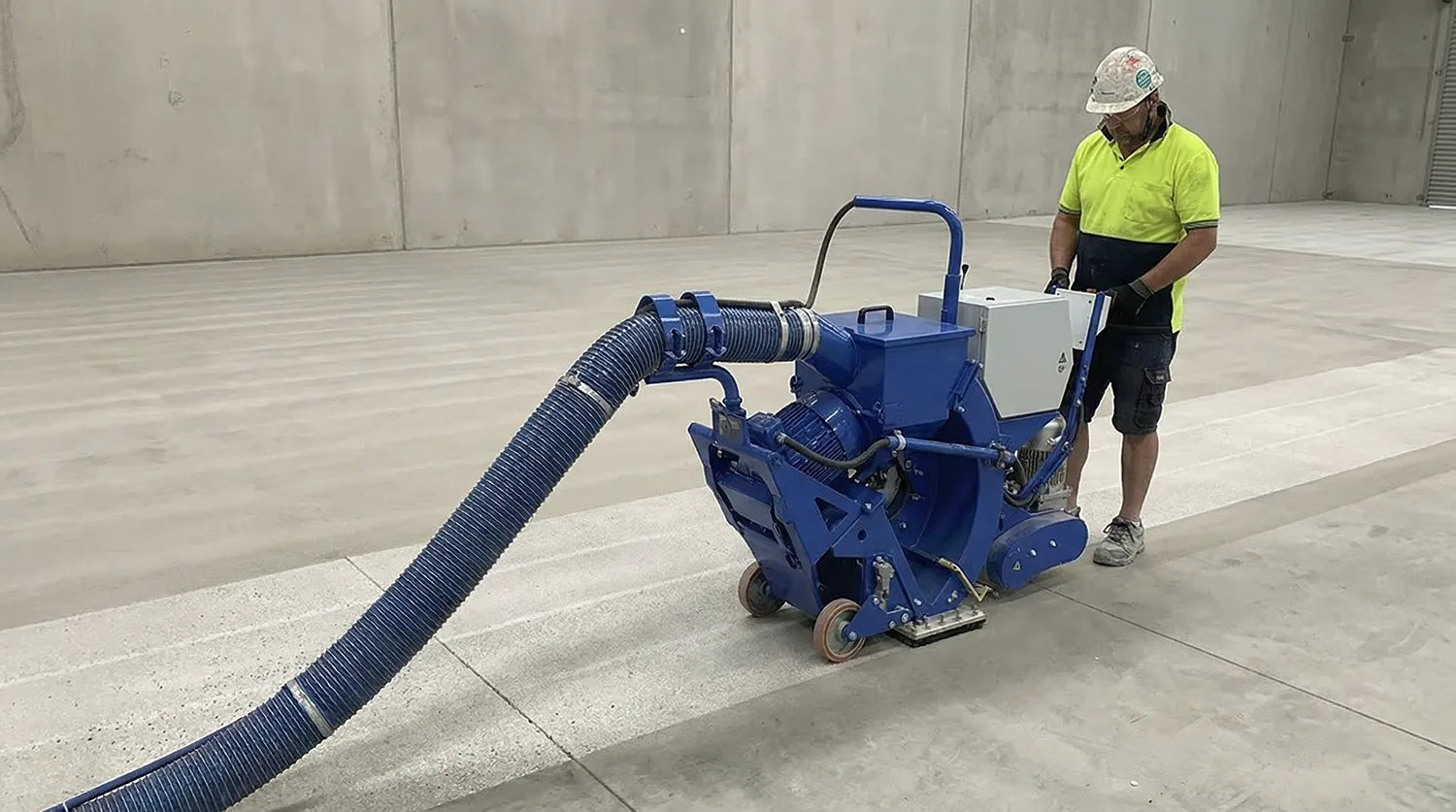
Shot blasting is widely regarded as one of the most consistent methods for preparing large commercial and industrial floors. It uses steel shot to fracture and clean the surface, removing weak layers and creating a uniform mechanical profile.
Shot blasting is often preferred when:
- The area is large and open (warehouses, plants, big commercial slabs)
- You need repeatable, consistent profiling across the whole floor
- You are building thicker systems where profiling consistency matters more
In practice, shot blasting can be harder to mobilize in small residential spaces, and it is not always the most cost-effective option for garages or tight areas. That is one reason you see grinding more often.
Diamond Grinding: The Most Common Real-World Choice for Garages and Small Jobs
Diamond grinding is the most common preparation method for residential garages and smaller commercial spaces because it is practical, accessible, and effective when done correctly. Using diamond tooling, the surface is mechanically abraded to remove coatings, open the concrete, and create the profile needed for epoxy adhesion.
Grinding is a strong choice when:
- You are working in a residential garage or smaller area
- You need to remove old paint or previous coatings
- You need more control around edges, corners, and details
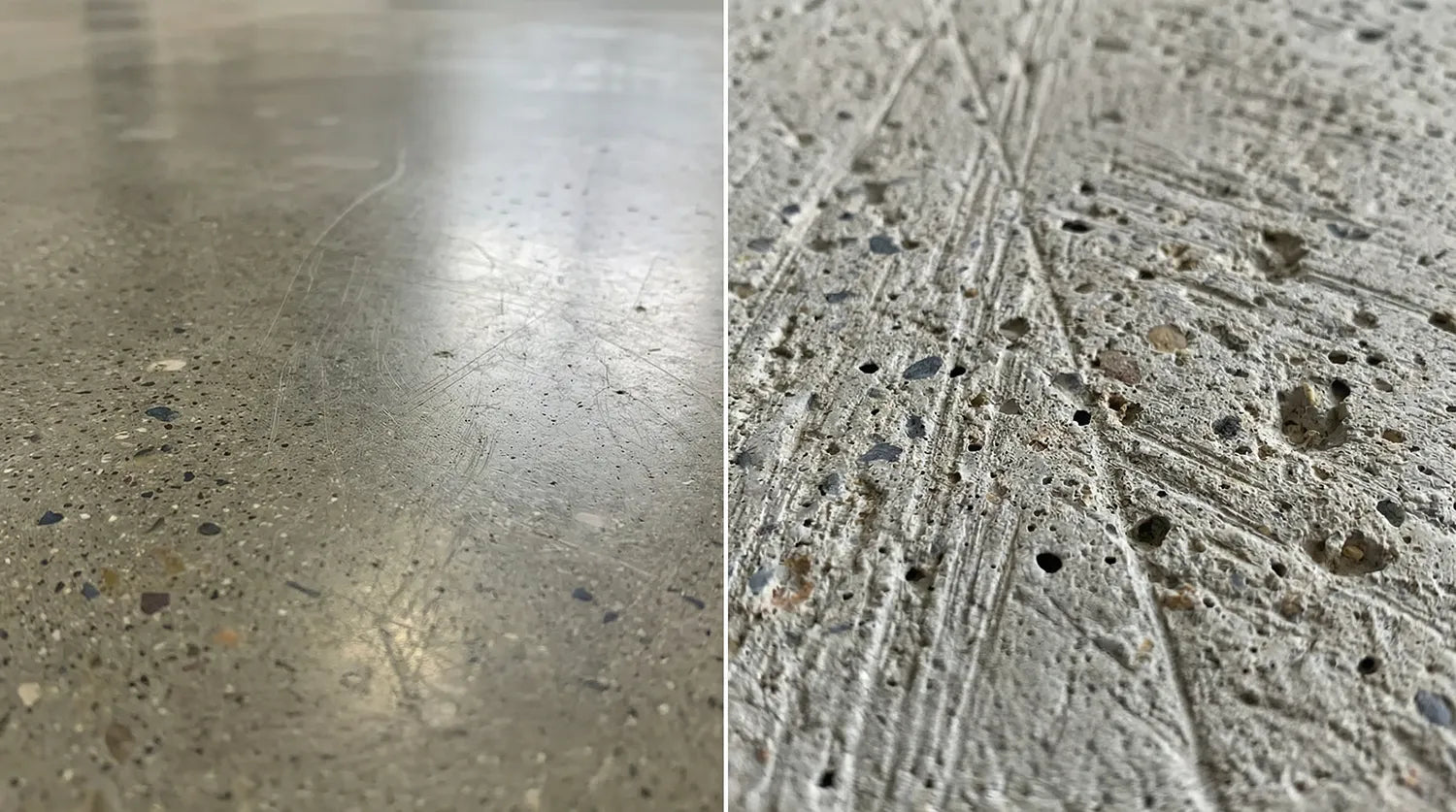
The main risk with grinding is not the method itself. The risk is using the wrong tooling or technique and polishing the surface instead of opening it. A properly ground surface should feel textured and open, not smooth or shiny.
Acid Etching: Why It Is Unreliable for Professional Results
Acid etching is still mentioned in DIY guides, but it has major limitations. It relies on a chemical reaction rather than physically removing weak surface material. That makes the outcome inconsistent from slab to slab.
In real-world conditions, acid etching often fails because it:
- Does not reliably remove curing compounds or sealers
- Cannot address oil contamination or embedded residues
- Produces uneven surface profiles that are hard to verify
- Depends heavily on perfect rinsing and neutralization
If long-term performance matters, mechanical preparation is the dependable route.
Which Method Should You Choose
A clean rule that holds up in the field is this:
- For large, open floors where consistency is critical, shot blasting is often preferred
- For garages and smaller jobs, grinding is usually the practical and effective choice
- Acid etching is rarely reliable enough when you want repeatable results
No matter which mechanical method you use, finish the prep properly. Vacuum thoroughly and inspect the slab. Dust left on the surface becomes a bond breaker.
Moisture and Damp Concrete: Two Different Problems
This is where many installs get misdiagnosed. A slab can be slightly damp at the surface, or it can be driving moisture vapor from below. Those are not the same condition, and they are not addressed the same way.
If the floor is damp but there is no standing water
Some systems can be applied over a damp floor as long as there are no standing puddles. A water-based epoxy primer such as BondMaxx 113 can be applied to a damp floor under those conditions.
If you have moisture vapor emission coming through the slab
When testing confirms elevated moisture vapor emission, you typically need a moisture vapor barrier designed for that purpose. A moisture vapor barrier epoxy such as VaporShield 125 is designed to help control moisture vapor emission rates up to its published limits. It is also important to note that it is not suitable for preventing hydrostatic or osmotic water conditions.
Final Takeaway
There is no shortcut to proper surface preparation. Shot blasting and diamond grinding both work when they are used in the right context and executed correctly. The key is achieving a sound mechanical profile, removing dust and contaminants, and selecting the correct primer approach for the slab conditions.
If you control those variables, epoxy floors perform predictably and hold up under real-world use.